Make organic waste recycling part of your organisation’s sustainability programme. Edama helps you connect day-to-day operations with environmental goals, people’s participation and the information you need to report progress.
Environmental, social and governance
A programme your teams can put into practice.
Environmental
Keep organic resources in use.
Recycle suitable organic waste through composting, returning organic matter to the soil. Build your programme around reducing reliance on landfill and recovering value from unavoidable waste.
Agree how to record the material received, material recovered and destination. Keep rejected material and contamination visible.
Social
Give people a part in the change.
Make source separation understandable for the people using your facilities. Staff awareness, practical sorting guidance and community activities can form part of your programme.
Set participation objectives and record the activities delivered. Compost use in community planting can be explored where suitable and agreed.
Governance
Support your reporting with clear records.
Define who is responsible for each stage, what will be measured and how results will be reported. Give sustainability, operations and procurement teams a shared basis for reviewing progress.
Agree the reporting period, supporting records and review process before the service begins. Distinguish measured results from estimates.
How Edama can help
Choose the approach that fits your organisation.
01
Recycle Your Organics
Recycle your organic waste at our KAUST facility on a gate-fee basis. Material suitability, acceptance requirements, logistics and fees are agreed before the service begins.
Engage us for consultancy, or partner with Edama to develop and operate a composting site at your location. The project scope and responsibilities are agreed around your site and objectives.
Bring recovered organic matter into landscape projects through Premium Green Compost. Review the product evidence and application guidance with your project team to determine suitability for your soils and planting plans.
We agree the reporting scope with you as part of the service proposal. Depending on the programme, this can cover:
Organic waste received and recovered, with units and reporting dates.
Material destination and the supporting treatment records available.
Rejected loads or contamination that affect recovery.
Staff or community activities and participation records.
Actions agreed to improve separation and programme performance.
Records support your organisation’s ESG reporting. They do not, by themselves, establish an audited ESG outcome, regulatory compliance or an ESG rating. Any emissions estimate needs an agreed method and clear assumptions; it is not a carbon credit.
Contributing to national priorities
Business action that supports Saudi Vision 2030.
Recovering organic resources, supporting planting and improving resource use connect everyday business decisions with the Kingdom’s sustainability ambitions. Edama’s recycling services and agricultural products offer practical ways for organisations to take part.
Less waste to landfill
MWAN’s national strategic plan targets 90% diversion of waste from landfill by 2040.
Separating and recycling suitable organic waste can support this direction. Your programme’s contribution should be reported through its own recovery records.
The Saudi Green Initiative’s long-term ambition includes planting 10 billion trees across the Kingdom.
Appropriate compost use can support soil preparation for planting. Product selection and application must suit the site; compost supplied is not a count of trees planted or land restored.
Vision 2030’s National Transformation Program includes environmental protection and the sustainable use of water resources.
Organic waste recycling and appropriate compost use connect resource recovery with the needs of soils and landscapes. Water outcomes depend on the soil, planting and irrigation regime and should be measured for each project.
These are national objectives, not results achieved by Edama or a statement of government endorsement. Each programme’s contribution must be supported by its own evidence.
Our work in practice
A circular programme at KAUST.
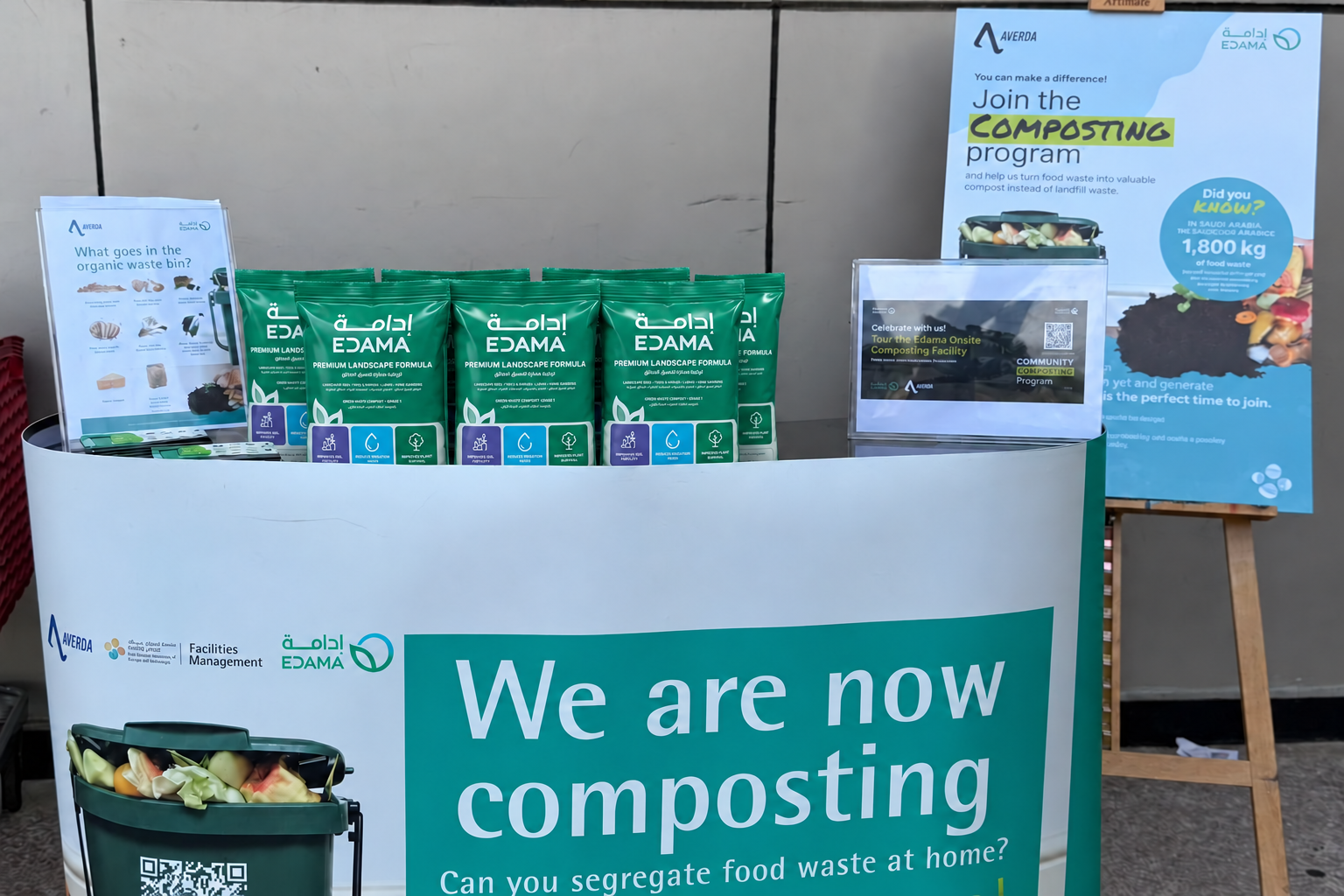
At KAUST, Edama’s composting work connects organic waste separation, facility operations and community participation. Compost returns to campus landscaping, showing how a recycling programme can connect operations with people and local use.
Tell us about your organic waste, location and sustainability objectives, including the information your team needs to report. We will help you identify the service and scope to discuss.